Understanding Your Travel Prospect’s Travel Shopping Journey
Very often, your travel customer prospects don’t have a sharp view of the exact vacation they will eventually book.
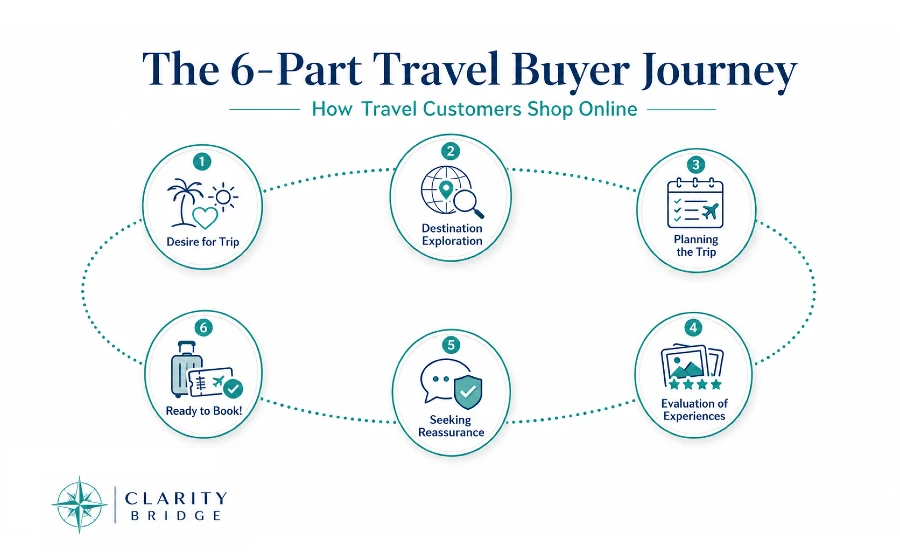
The 6 phases of their dream vacation search process is where they build and clarify, check the vibe they feel, then repeat until they assemble something that looks satisfying and creates the decision to book.
Travelers have travel intent, but it’s a malleable kind of purpose which is great for you and your content marketing strategy. Instead of them going straight to Hotels.com, Booking.com, Expedia or some other OTA, they’re exploring and discovering on other travel websites. They love the experience of shopping for their perfect trip. And, if you understand their shopping process and manage to reach and engage them with your content and opening to your messages, you can move them through your booking conversion funnel.
Their travel shopping journey may start with a photograph of a tropical coastal beach resort, a friend’s recommendation, a short video about San Francisco, or blog post about golfing in San Diego, or maybe they only have a simple feeling: We need a relaxing trip somewhere interesting and warm. Imagine if you had research and data to help you understand what your specific customers/prospects are thinking.
It’s the kind of insight you’ll appreciate from your Clarity Report.
From their wishful beginning, your target traveler begins shaping an experience—choosing a destination, deciding how the trip should feel, comparing accommodations and working through dozens of practical details.
For you as the agency owner or senior marketer, understanding this buyer journey process is essential.
Your customers aren’t simply shopping for flights, views, events, hotel rooms or tour packages. They’re gradually building a trip that may require a meaningful investment of time, money, risk and emotion. It’s a project of sorts as they try to get as much into the trip as they feel they should.
The more specifically your social and web content, advertising, landing pages, CTAs and conversion flow matches their decision process, the more likely they’ll find your company relevant and reliable. It all reinforces the idea that you can deliver that safe, satisfying travel experience.
Travel Shopping is Rarely a Straight Line
The traditional marketing funnel suggests that people move neatly from awareness to consideration and then to purchase. But the actual travel planning funnel is more asynchronous.
Google describes the space between initial interest and purchase as the “messy middle.” What is less clear to travel business owners/marketers is how travelers experience and process all of the information and choice they discover along the way. During this period, customers alternate between exploration—opening themselves to more possibilities and evaluation and narrowing those possibilities so they can choose. They’re moving themselves toward a decision.

They may choose a destination, reconsider it, compare alternatives and return to an earlier idea before finally booking. Something you well know, however, you might not understand the amount of content they’re consuming to perfect their decision.
An Expedia Group and Luth Research study examined the online behavior of more than 70,000 travelers and surveyed more than 5,700 people across seven countries. In the 45 days before booking, travelers viewed an average of 141 pages of travel content. U.S. travelers viewed an average of 277 pages.
North American travelers spent even more time researching than the global average. Expedia found that travelers across the Americas consumed nearly six and a half hours of travel content before booking, while U.S. travelers spent close to nine hours.
That is a great deal of content exploration, offer comparison and emotional reassurance.
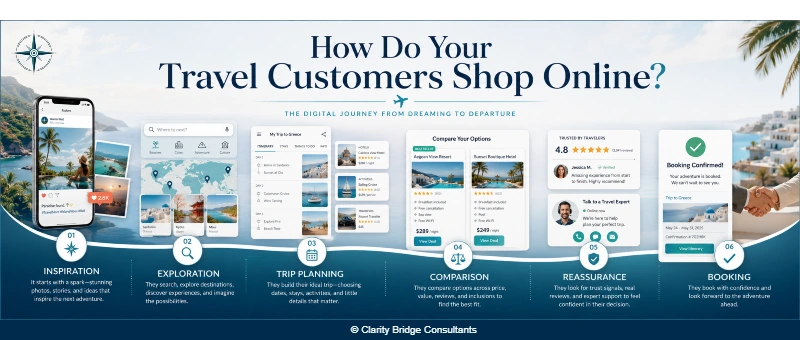
It’s best understood as a 6 stage process of building their perfect vacation.
Travel Shoppers Stage 1: A Desire or Occasion Inspires a Trip
Their first stage often begins before a destination has been chosen.
A couple may be thinking about an anniversary. A family may want to reconnect during the summer. A traveler may be dreaming about food, scenery, wellness, culture or adventure.
At this point, they’re not necessarily searching for a specific product but are more focused on the type of experience that would satisfy the desire behind the trip. We might call that the travel vibe.
Expedia found that 59% of surveyed travelers either had no specific destination in mind or were considering multiple destinations when they stated thinking about traveling.
This fact creates an important opportunity for your travel company: You don’t always have to wait until the customer searches for a specific itinerary. You can help shape their travel idea earlier.
Useful content at this awareness stage includes:
- Inspirational destination stories
- Short-form social video
- Seasonal travel ideas
- Experience-based photography
- Articles organized around traveler interests
- “Where should we go?” guides
The marketing message should focus on the promise of the journey: the atmosphere, memories, pace and personal emotional rewards the traveler wishes for.
Travel Shopper Stage 2: The Traveler Explores Destinations and Possibilities
As the travel idea becomes more serious, the customer feels more commitment and confidence and begins considering options.
A traveler interested in California might compare San Francisco, San Diego, Monterey, Napa Valley or Los Angeles. Someone considering San Francisco may then wonder whether to add Sonoma, Yosemite or the Pacific Coast Highway.
This is the expansive part of their travel shopping journey. Search engines, social platforms, online travel agencies, travel publications and AI chat assistants may all play a role.
Expedia found that 80% of travelers visited an online travel agency at some point before making their travel purchase. Search engines were used by 61%, while 58% used social media during their path to purchase.
At this stage, travel businesses can provide destination comparisons, regional guides and content explaining who each experience suits.
A traveler should be able to answer questions such as:
- What makes this destination distinctive?
- Is it suitable for couples, families or groups?
- What is the best time to visit?
- How long should we stay?
- What kind of budget is realistic?
- Can it be combined with another destination?
The travel agency, tour company, hotel, or DMC that provides clear, enjoyable answers begins to feel like a trusted advisor rather than another travel seller. Timely answers builds proof of relevance and ability to deliver, and helps avoids gaps where the travel customer lead is lost. This is where having lots of specific, helpful content can smooth their shopping pathway. AI content generation might play a key role in designing that content.
Travel Shopper Stage 3: They Begin Constructing the Trip
The customer now moves from Where might we go? to What would our trip actually look like?
This is where the journey becomes more detailed. Travelers begin considering trip length, neighborhoods, accommodation style, transportation, dining, activities and the balance between planned experiences and free time.
For example, a San Francisco traveler might consider:
- 3 nights in the city or 5
- A hotel near Union Square, the Embarcadero or Fisherman’s Wharf
- A day trip to the NAPA wine country
- A drive south toward Monterey and Carmel
- Whether to rent a car or use private transportation
- How much guided touring to include
The individual decisions are connected. In their hotel search, they go beyond room features to assess the location on their available time, energy, itinerary, transportation choices, restaurant needs, and their overall image of their SF Bay area adventure.
Content at this particular stage should help the traveler put all these pieces together easily. You might provide sample itineraries, attraction and neighborhood guides, maps, travel-time estimates, and some restaurant comparisons to help ease any uncertainty.
Travel Shoppers Stage 4: Exploration Turns into Evaluation
As their imagined vacation begins to take shape, the shopping process becomes more selective.
They hone in on flight providers, itineraries, hotels, prices and inclusions. They may go back and forth on the many travel websites they prefer, trying to clarify the meaningful and usable trip elements for them.
This is where a travel company needs much more than attractive destination copy. You’ll need to present a clear value proposition, one that helps resolve their unique concerns/needs.
You must help them understand:
- What‘s included
- Specifically, who the trip is designed for
- Why specific hotels or experiences were presented to them
- What type of travel service support is provided
- How your company’s expertise improves the journey and their comfort
- What distinguishes your offer from alternatives
Price matters, but travelers are also evaluating convenience, trust, fit, comfort, perceived satisfaction, and the risk of making a disappointing choice.
Having a well-designed comparison page or detailed itinerary list might be the most effective conversion asset.
Travel Shoppers Stage 5: The Customer Looks for Reassurance
Travel is an emotional purchase, and there are an array of worries they feel. That might include your trip/booking cancellation terms, hidden costs, hotel quality, transportation, disruptions or whether the trip will live up to their expectations.
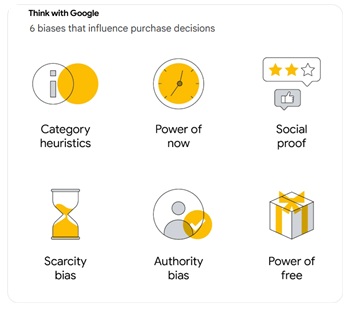
Reviews, testimonials, advisor profiles, clear policies and transparent explanations become especially valuable.
In the end, the traveler tries to mentally make the trip clear and workable which helps them move to a feeling of certainty. It’s a moment where they can say “Yes, I’m ready to book.”
Yet, often today, travelers want to speak to real person, such as a travel advisor. If there are still questions and complications they feel uneasy about, they will prefer the guidance of a travel pro or customer service person. That will often mean a phone call so actions are crystallized and confirmed live, in real time.
AI is entering the research process. An Amadeus study published in 2025 found that 34% of surveyed U.S. travelers used social media for travel inspiration, while 17% consulted generative AI tools for ideas. AI usage for inspiration had increased 30% from the previous year in that study.
This creates a blended journey. A customer may use AI search to generate ideas, AI chat to validate them, social media to visualize the experience and then an advisor to ascertain whether they’re itinerary is doable or kind of sketchy.
Travel Shopper Stage 6: The Traveler is Ready for a Simple Next Step
By the time a traveler reaches their moment of contacting an advisor or to book, much of your content marketing persuasion and convincing should already have been completed.
Your website should make the next step feel easy and reassuring – with a simple flow so they don’t have to think again about it. This could involve a direct booking tool, scheduling a consultation, filling a form requesting a proposal or with a phone call with an advisor.
This transition to the booking commitment should explain what happens next:
- When will someone contact them?
- What information should they prepare?
- Is the initial conversation complimentary?
- Will they receive itinerary recommendations?
- How are planning fees or deposits handled?
A strong call to action (CTA) creates direction which reduces uncertainty about moving forward and eases their worry over buyers remorse. They’ll always have a feeling of not being 100% ready, because the number of options available are endless. You need to end the option possibility thinking and make them feel good about their decision.
Building Marketing around Your Targeted Traveler’s Shopping Style
Your travel company needs quality, relevant content for each part of their decision journey, not only the moment of booking.
Social content can create the first spark. Search-friendly destination articles can help travelers explore. Detailed guides and itineraries can support planning. Comparison pages, reviews and advisor expertise can strengthen evaluation. Clear inquiry pages can convert confidence into action.
Visitor and customer analytics can help you define your customer profile and the behaviors they exhibit while shopping. These are the signals travelers leave behind: the pages they view, advertisements they respond to, guides they request, emails they open and questions they ask.
Your Customer Insight & Marketing Clarity Report is designed to bring these signals together as a cohesive, informative guide for your decision-making. It helps clarify who the company’s most valuable travelers are, how they shop, what information they need and where your current marketing journey may be losing their attention.
The goal is not simply to create more content. It’s to create a better-timed, more connected customer experience throughout your marketing funnel — one that helps travelers move from an early dream to a confident decision, with your business and brand image accompanying them throughout the journey.
Choose Clarity Bridge Consultants to design and craft your customer journey.